
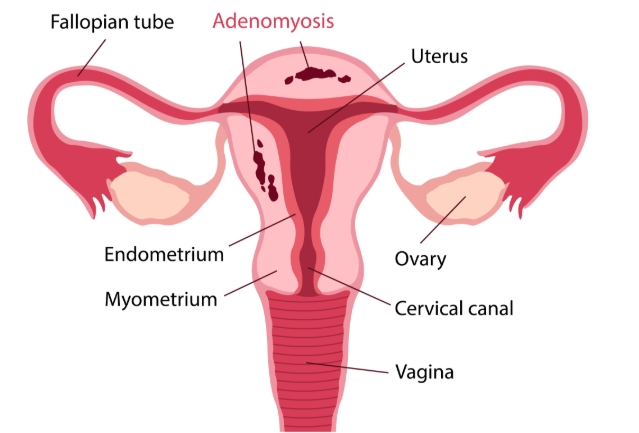
What is Adenomyosis?
Adenomyosis is a condition where tissue from the lining of the uterus grows into the muscle wall of the uterus. Because of this, women may experience pain and heavy periods. Adenomyosis can affect women of any age, but it is more common in women aged 30 to 50. Although it is not life-threatening, it can cause discomfort and affect daily life. Understanding adenomyosis symptoms, how it is diagnosed, and available treatment options can help you manage the condition better.
Common Symptoms of Adenomyosis
Many women with adenomyosis may not notice any symptoms. However, some may have signs that affect their quality of life. For example, you may notice:
Sometimes, these symptoms can be similar to other conditions like fibroids or endometriosis. Therefore, it is important to talk to your doctor if you notice any of these signs.
Causes and Risk Factors
Doctors do not know the exact cause of adenomyosis. However, several factors may increase your risk. For instance, you may be at higher risk if you:
Although the cause is unclear, hormones like estrogen seem to play a role. In addition, some studies suggest that inflammation or injury to the uterus may contribute.
How is Adenomyosis Diagnosed?
Doctors use several methods to diagnose adenomyosis. First, your doctor will ask about your symptoms and medical history. Then, they may do a pelvic exam to check for an enlarged or tender uterus. However, adenomyosis can be hard to diagnose because its symptoms are similar to other conditions. For this reason, your doctor may recommend:
Because adenomyosis can look like other issues, it is important to see a gynecologist who has experience with this condition. In some locations, access to advanced imaging like MRI may be limited, so your doctor will choose the best available tests.
Treatment Options for Adenomyosis
Treatment for adenomyosis depends on your symptoms, age, and plans for having children. While some women may not need treatment, others may need help to manage pain or heavy bleeding. Common adenomyosis treatment options include:
Because each woman is different, your doctor will help you choose the best treatment. According to the World Health Organization and peer-reviewed studies, most treatments aim to relieve symptoms and improve quality of life.
Lifestyle Tips and Prevention
Although you cannot always prevent adenomyosis, some lifestyle changes may help manage symptoms. For example, you can:
While these steps may not cure adenomyosis, they can help you feel better day to day. In summary, early diagnosis and treatment can make a big difference.
If you have symptoms of adenomyosis or concerns about your health, consult a gynecologist at SR Hospital for personalized advice on adenomyosis.